 OMNI
OMNI What is Generative Engine Optimization (GEO)?

What is Generative Engine Optimization (GEO)?
Generative Engine Optimization (GEO) is the practice of optimizing your content and website to be discovered, cited, and trusted by AI search engines like ChatGPT, Perplexity, Gemini, and Claude.
In short: GEO helps your brand appear in AI-generated answers when users ask ChatGPT, Perplexity, or Gemini about topics in your niche. Unlike SEO which fights for position #1 in Google, GEO ensures AI engines cite your brand as a trusted source — even when users never click a link.
Why GEO Matters in 2026
Traditional SEO focuses on ranking in Google. But AI search is different:
- 60% of AI searches end without a click
- Only 16% of brands appear in AI-generated answers
- AI traffic converts at 14.2% — nearly 5x organic
I use Surfer SEO alongside GEO strategies for maximum visibility.
The 3 Pillars of GEO
1. Technical Signals
AI crawlers like GPTBot, ClaudeBot, and PerplexityBot need to access and understand your site. Technical signals include:
- robots.txt — Allow AI crawlers, not just Googlebot
- llms.txt — Guide AI on what content to prioritize
- Schema markup — FAQPage, HowTo, Article, Organization schemas
- AI.txt — Control how AI uses your content (indexing vs training)
- Page speed — AI crawlers have timeout limits
Learn how to create llms.txt for your website to guide AI crawlers.
2. Content Structure
AI engines extract answer snippets from your content. Structure matters:
- Answer-first format — Direct answer in first 40-60 words
- Self-Contained Units (SCUs) — Each section stands alone
- Evidence every 150-200 words — Statistics, data, citations
- Question-based headers — H2/H3 phrased as user questions
- Comparison tables — Easy for AI to extract differences
See how GEO differs from traditional SEO in our detailed comparison.
3. Brand Entity
AI engines trust brands with consistent presence across the web:
- NAP consistency — Name, Address, Phone identical everywhere
- Third-party reviews — G2, Capterra, Trustpilot presence
- Social proof — LinkedIn, Twitter, GitHub activity
- Authority content — Guest posts, podcasts, speaking
- Knowledge panel — Google Knowledge Graph presence
The Complete GEO Checklist 2026
25 actionable steps to optimize your brand for AI search engines like ChatGPT and Perplexity.
FAQ
Q: What is GEO and how is it different from SEO?
A: GEO (Generative Engine Optimization) is the practice of optimizing your content to be discovered, cited, and trusted by AI search engines like ChatGPT, Perplexity, and Gemini. While SEO focuses on ranking in traditional search engines like Google, GEO focuses on being the source that AI engines cite when generating answers. Key differences: SEO targets blue links rankings, GEO targets AI citations; SEO uses keyword density, GEO uses answer-first content; SEO needs backlinks, GEO needs schema markup and brand entity signals.
Q: Why does GEO matter in 2026?
A: GEO matters because 60% of AI searches end without a click, only 16% of brands appear in AI-generated answers, and AI traffic converts at 14.2% — nearly 5x higher than traditional organic traffic. As AI search engines become primary information sources, brands not optimized for AI search will become invisible to their target audience. At OnmiRank, we've analyzed over 500 websites and found that GEO-optimized brands get cited 3x more often in AI-generated responses.
Q: What are the 3 pillars of GEO?
A:
The 3 pillars of GEO are: (1) Technical Signals — ensuring AI crawlers can access your site (robots.txt),
implementing schema markup (FAQPage, HowTo, Article), and creating AI-specific files like llms.txt;
(2) Content Structure — using answer-first format, self-contained units (SCUs), and evidence-based writing with statistics every 150-200 words;
(3) Brand Entity — maintaining NAP consistency, building third-party presence on review platforms, and establishing authority signals
across LinkedIn, Twitter, GitHub activity, and directories.
Q: How long does it take for GEO to work?
A: Most websites see initial AI citation improvements within 4-8 weeks of implementing GEO best practices. Full results typically appear within 3 months. However, this depends on your starting point — sites with existing SEO foundations see faster results, while new sites may need 6 months to build sufficient authority signals. The key is consistency: regularly update content, maintain freshness signals, and monitor your GEO score with tools like OnmiRank.
Q: Can I do GEO without technical skills?
A: Yes, basic GEO can be implemented without coding. Content optimization (answer-first structure, FAQ sections, evidence-based writing) requires no technical skills. Technical GEO (schema markup, llms.txt, AI.txt) requires minimal technical knowledge that most marketers can learn in a weekend. Tools like OnmiRank can automate technical GEO implementation, allowing non-technical users to optimize for AI search without touching code. Start with our free GEO Checklist to see what's involved.
Check Your Site's AI Search Visibility Now
LLMs index sites differently than Google. Run a free GEO scan to see if ChatGPT, Perplexity, and Gemini can find your business.
Want to track your GEO progress? Plan your strategy in Notion and monitor with OnmiRank.
You Might Also Like
 OmniRank Media
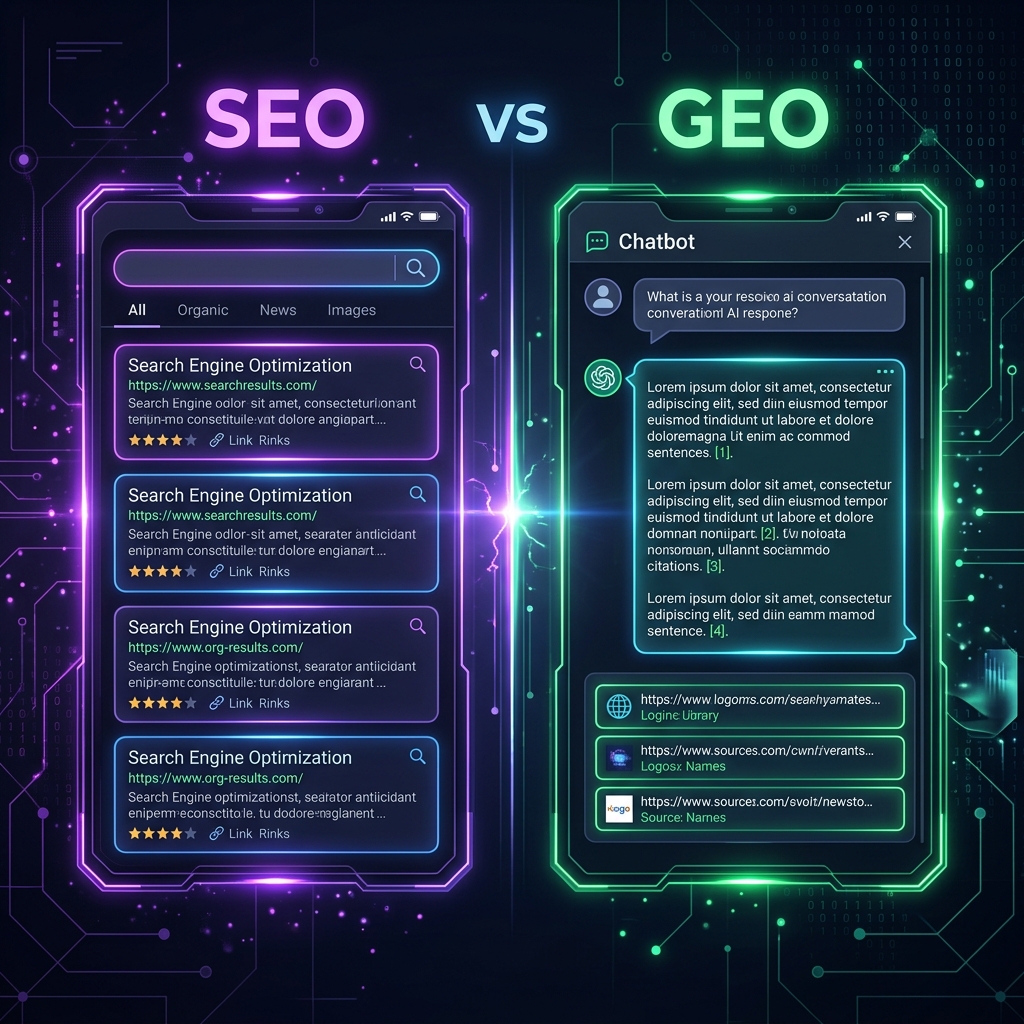
GEO vs SEO: The Key Differences You Need to Know
Is traditional SEO dead? Compare traditional search engine optimization with generative engine optimization side-by-side. Learn the key differences and how to rank in both.
Get Weekly GEO Strategy Updates
We send practical, technical tips on ranking in ChatGPT, Perplexity, Gemini, and Claude.